Shed removal & demolition in Grand Prairie, TX
Plan a backyard shed teardown around the structure, connected utilities, local rules, and the route from the yard to the truck.
Properties near major east-west corridors can still have tight neighborhood access, so driveway and truck placement belong in the estimate.
Local planning notes
Grand Prairie’s landfill accepts wood, fencing, concrete, and other large items generated in the city.
Residents must meet local identification and utility-account rules for residential loads.
Municipal source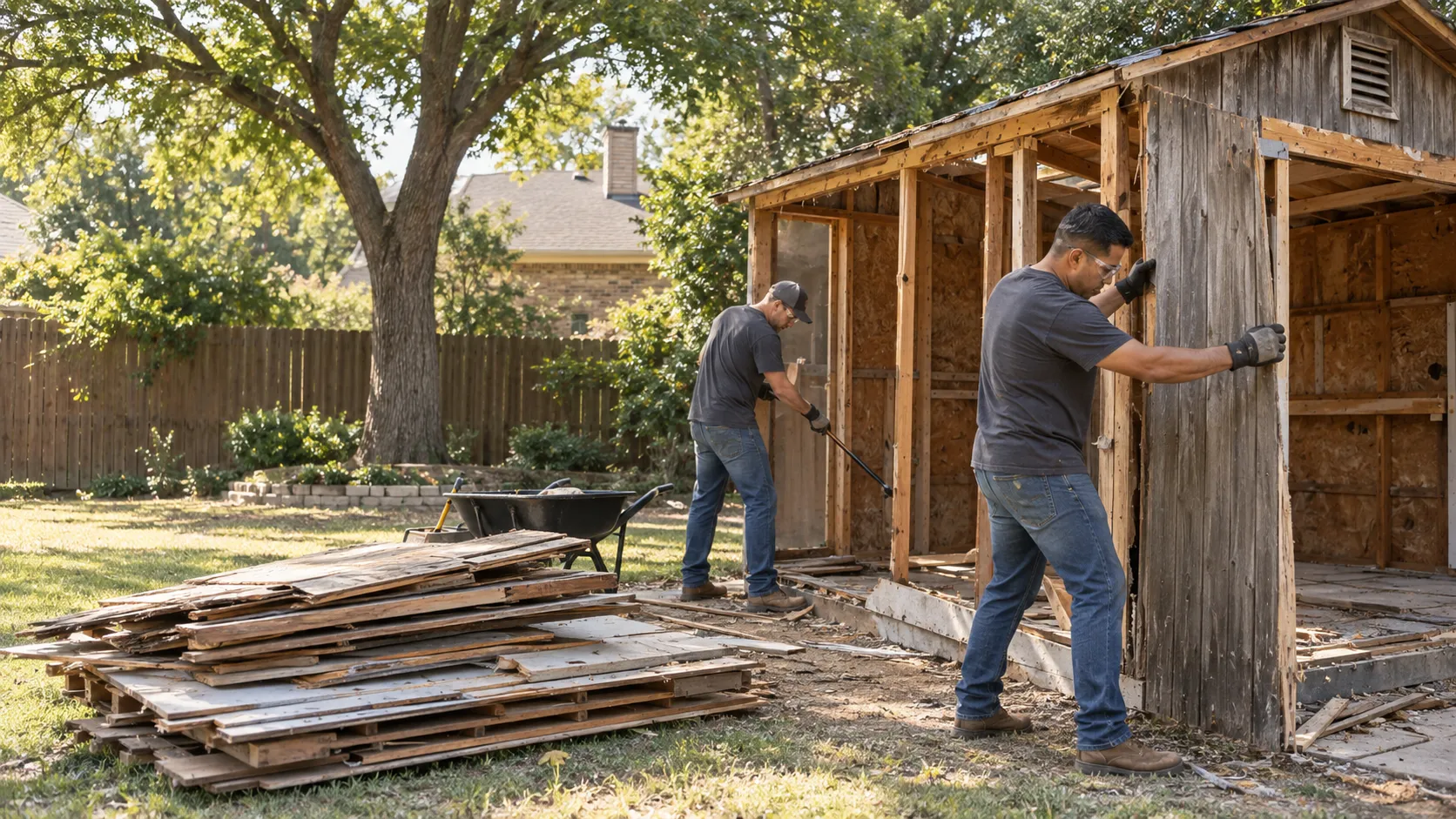
Why municipal bulk pickup is not the whole plan
Shed debris can mix lumber, roofing, metal, concrete, stored chemicals, and oversized pieces. City programs often apply material, volume, residency, timing, or set-out rules. A removal estimate should account for the complete job rather than assume every piece belongs at the curb.
Review the full shed-removal scopeFrom the first photo to a clear work area
Show all sides of the shed plus its contents, floor, base, and surrounding yard.
Settle utilities, permits, access, exclusions, and what happens to the slab or footings.
Clear the route and protect pets, children, vehicles, and anything staying on the property.
Questions for Grand Prairie properties
Does city bulk collection take shed debris?
Rules depend on material, volume, who generated the debris, and how it is prepared. Check the municipal source above and do not assume a full teardown qualifies.
What if access is through an alley?
Share alley width, gate position, parking limits, overhead lines, and the distance to the structure. The truck location and hand-carry route can change the job plan.
Should I check permits first?
Yes. Contact the local building department with the property address and structure details before demolition begins.
Start with the structure, access, and finish line.
Have photos, rough dimensions, utility notes, and the narrowest route measurement ready.